

FRENCH PUBLIC HIGHSCHOOL – STS
Price range: € 7,050 through € 7,950
Flights not Included
Description
Do your French exchange year in France
High School in France
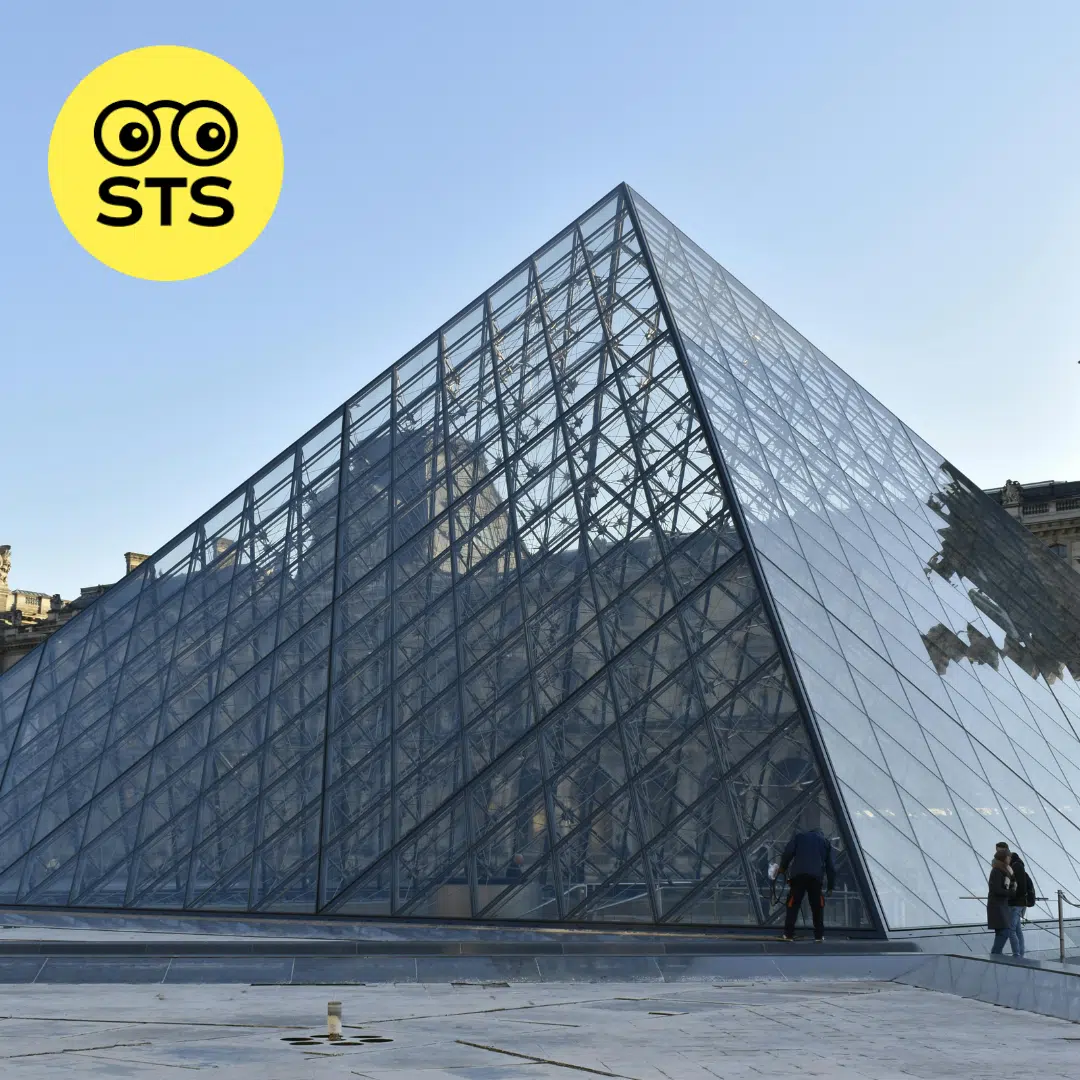
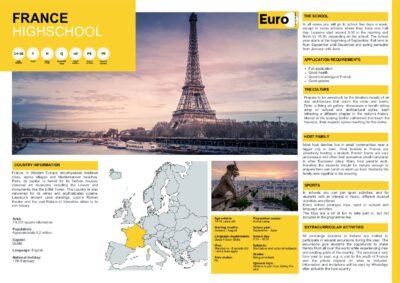
Around 85 million tourists from all over the world can’t be wrong – France is the place to visit. For decades the country has had the number 1 spot in the World Tourism Organisation’s yearly statistics. It’s no wonder France is a favorite. Shopping, fashion and sightseeing in Paris, the glamorous beach life on the Côte d’Azur, skiing in the French Alps and a beautiful countryside are some of the things that attracts foreigners. Also, it’s no doubt that France is number 1 when it comes to food. Will you try a delicacy such as escargots?
High School Classic
High School Classic is the traditional high school exchange programme, chosen by most of our students. It is the perfect programme for those who long for a genuine high school experience abroad and who are willing to embrace all the surprises it can bring. Here’s how it works: based on your profile, we match you with a host family and school, and the best part is, it can be anywhere in France, from the Paris region to the rugged coastlines of Brittany! If you’re open to adventure and are willing to let yourself be surprised by your exchange experience, this is the programme for you.
CLICK ON IMAGE FOR MORE
Additional information
| Duration | 2 months, 3 months, Academic Year, Deposit, Semester |
|---|
Experience
Student exchange program to France
France is an enchanting mix of artistic, historic, cultural and gastronomic experiences. Every corner tells a fascinating tale, and every meal is a journey through flavours and traditions.
Enjoy a freshly baked croissant from your local boulangerie; step back in time while strolling through the majestic castles of the Loire Valley; wander the streets of Montmartre, where street artists paint the daily coming and going of people; hike through the Pyrenees trails, enjoying the awe-inspiring scenery. Experience the magic that only France can offer.
Your School
The practice of recognising educational milestones attained, instead of giving marks, is more and more common in France. This approach focuses on the importance of learning, rather than performance and being defined by a number.
Cutting-edge infrastructure
French schools are a pillar of the community and for this reason, you will find modern buildings equipped with tablets, computers and specialist rooms/laboratories… everything you need for a quality educational experience.
Practical approach
The concept of learning by doing is at the forefront of French schooling. In France, you’ll be on the front line: experiments, practical workshops, group work, research… especially as far as scientific subjects are concerned.
Different schedule
The school day in France is intense, with activities often stretching until 4:30 pm and an extended lunch break to socialise, relax, or complete any assignments. Long school days mean that homework is minimal. Oh, and Wednesday afternoons are usually free!
The French education system
French education is made up of four different cycles: kindergarten from 3 to 6 years of age, primary school until 11 years of age, secondary school until 18 and then, for those wishing to continue studying, higher education.
Subjects in France
The number of subjects in French schools progresses as students grow, with more courses added each year. Most subjects, including math, French, history and geography are compulsory, but students can personalise their schedule to some extent.
In vocational-type schools, students complete several internships and practical work experiences. In technical and generic lycées, they study lots of different subjects, with a particular focus on humanities and the arts.
French secondary school
Secondary education is divided in two stages: collèges (four years, for students aged 11-14) and lycées, organised as follows:
– Seconde – the first year – 15-16 years old
– Première – the second year – 16-17 years old
– Terminale – the last year – 17-18 years old
French students can choose which type of lycée to attend, depending on their aptitudes and fields of interest:
– Generic
– Technical
– Vocational
Extra-curricular activities
French schools don’t offer many extra-curricular activities. If you wish to play a sport or get involved in a recreational activity, ask your host family or coordinator to help you look for opportunities available locally – clubs, sports centre, youth groups or associations, etc.
School in France is quite demanding; to extend your networks and make friends outside of school, get involved in the community and try new activities and past-times.
The school calendar
The academic year in France starts in early September and ends in late June or early July. Schools close for regular breaks every six to eight weeks, and in particular:
- in late October (Toussaint) for approximately 10 days
- at Christmas/New year for 2 weeks
- in the winter (February/March) 2 two weeks
- in the spring (April/May) for 2 weeks
The summer holidays last about 2 months and during this time, students usually sign up for recreational activities, camps, excursions or holidays, or simply spend time at home with their family.
Host Family
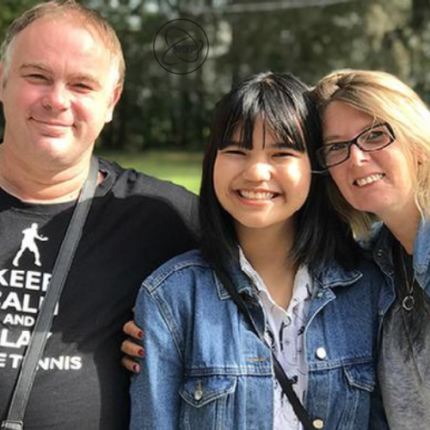
Gain a second family – they can’t wait to welcome you into their lives!
Here is why:
French families are welcoming and have a lot to give; the concept of hosting has deeply rooted in their social fabric over the years. You’ll feel right at home!
There is no French “traditional family”! Leave aside all expectations and be prepared to discover new family set-ups and dynamics, it’s all part of the adventure.
You will slide into the routine of a French family. Their daily life and customs will become yours: everyday life, activities, celebrations, food… little by little, you’ll become trés français!
Welcome Camp - Included
STS Welcome Camp in Europe
Your exchange begins with our fun Welcome Camp in Europe! The Welcome Camp gives you the best possible start to your exchange, and is packed with sightseeing, seminars, new friends and lots of fun.
Welcome camp is included for all students going in the autumn. Welcome camp is not included if you go in the spring term.